Freshman Year Program
The Medgar Evers College (MEC) Freshman Year Program is designed to help students develop the skillset and discipline to transition from high school to college and complete their degrees on time. The goal is to support our students in having a Freshman year that integrates and incorporates both academic and non-academic programming while providing a socially inclusive environment that supports the emotional and educational needs of our students.
Key Benefits
Improve academic performance.
Build skills essential for academic success.
Assist students on how to utilize on-campus resources.
Foster student-faculty relationships.
Develop critical thinking skills.
Understanding learning style and taking necessary
What is Freshman Seminar?
During the first semester, all first-year students are expected and encouraged to take Freshman Seminar (FS 101) and 15 credits that meet the student’s general education requirements to graduate on time.
Freshman Seminar is designed to ease student transition from high school to college life that creates a space for students to discuss and reflect on their academic goals. The discussion-oriented classes are taught by faculty members, small in size to give each student the opportunity to develop academic skills in a collaborative environment.
Students are introduced to the following modules:
- Orientation to learn about MEC’s history, mission, vision, students’ rights, and responsibilities
- Medgar Wiley Evers and the importance of civic engagement
- Building relationships with faculty and peers
- Learn how to manage college and life and create efficient schedules for success
- Learn effective study skills that consist of note-taking, outlining, test-taking
- Technological proficiency in an academic environment using College email account software, Blackboard, CUNYfirst, Schedule Builder, EAB Navigate, e-portfolio, and library research
- Basic financial literacy
- Wellness for the mind and body, overcoming test anxiety, diet, and physical activity
- Develop interests and skills through targeted activities and career assessments
- Develop a personal brand reflected in an e-portfolio
- Develop compelling biography, cover letter, resume, and elevator pitch
- Learn interviewing techniques and communication strategies
- Gain an understanding of how organizations operate, from structure to job description and evaluation
- Learn how to compare and contrast themselves with successful individuals within their career fields to see what worked and what didn’t
- Learn practical skills to make informed financial and life decisions upon graduation
- Learn about post-graduate and professional opportunities affiliated with their majors and career choices.
This course is a one-credit course, and meets for one hour and fifteen minutes, once a week.
Support
Services
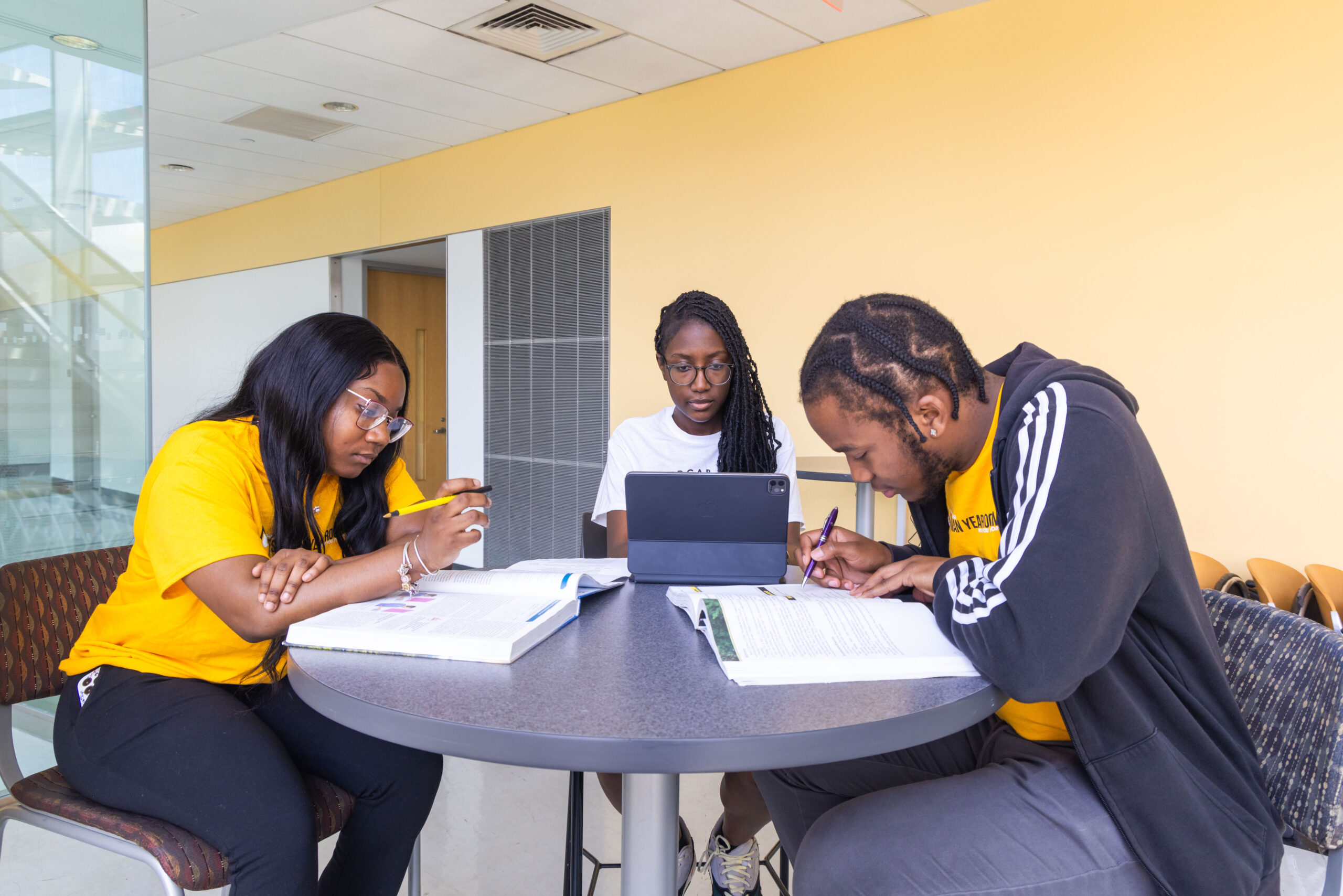
Freshman Year Program offers students a variety of supportive services to ensure academic and personal success:
- Advisors: assist students in course selection, understanding general education requirements, and navigating academic policies and procedures
- Counseling: trained professionals ready to help first-year students with any issues that they may be having
- Health: trained professional read to help first-year students with education on various aspects of healthy living
- Male Development Empowerment Center (MDEC) MDEC serves the purpose of providing a venue for male students to connect, become involved, and develop into leaders and advocates for the needs, issues, and concerns of male students within the campus community and beyond.
- Predominately Black Institution (PBI) Funded by the U.S. Department of Education’s Predominantly Black Institutions to establish or strengthen programs for low-income or first-generation college undergraduate students enrolled at the Medgar Evers College
- Academic Center for Excellence in Student Support: helps students succeed in their courses
Supplemental instruction to reinforce learning experiences within classes:
- TRiO Student Support Services
- The Center for Women’s Development (CWD) The mission of the Center for Women’s Development (CWD) is to promote the self-actualization of women in pursuit of higher education by providing the direct services and programs of specialized support they need.
Freshman Year Program
Staff
Frequently Asked Questions
If that sounds overwhelming, consider this: College gives you more control over what you study, so you’ll be learning about things you love. Plus, you don’t have to go it alone. Grab a friend and head to the library, Learning Center, MDEC, PBI, or review lecture notes on your laptop at your favorite coffee shop.
Once you have been notified that you are eligible for work-study, be proactive, and begin looking for a campus job. Don’t just apply for one position; pursuing multiple Jobs will give you more options. Most colleges and universities work on a first-come, first-served basis for work-study positions, so apply early and follow up with the departments that interest you.
- You’ll gain work experience and be able to explore different career paths.
- Working on campus will help you become familiar with your College or University.
- Professional networking opportunities will allow you to meet valuable references to add to your resume.
- Your work schedule will be flexible enough for you to focus on your classes.
- The wages you earn will not count towards the following year’s student contribution section of the FAFSA.