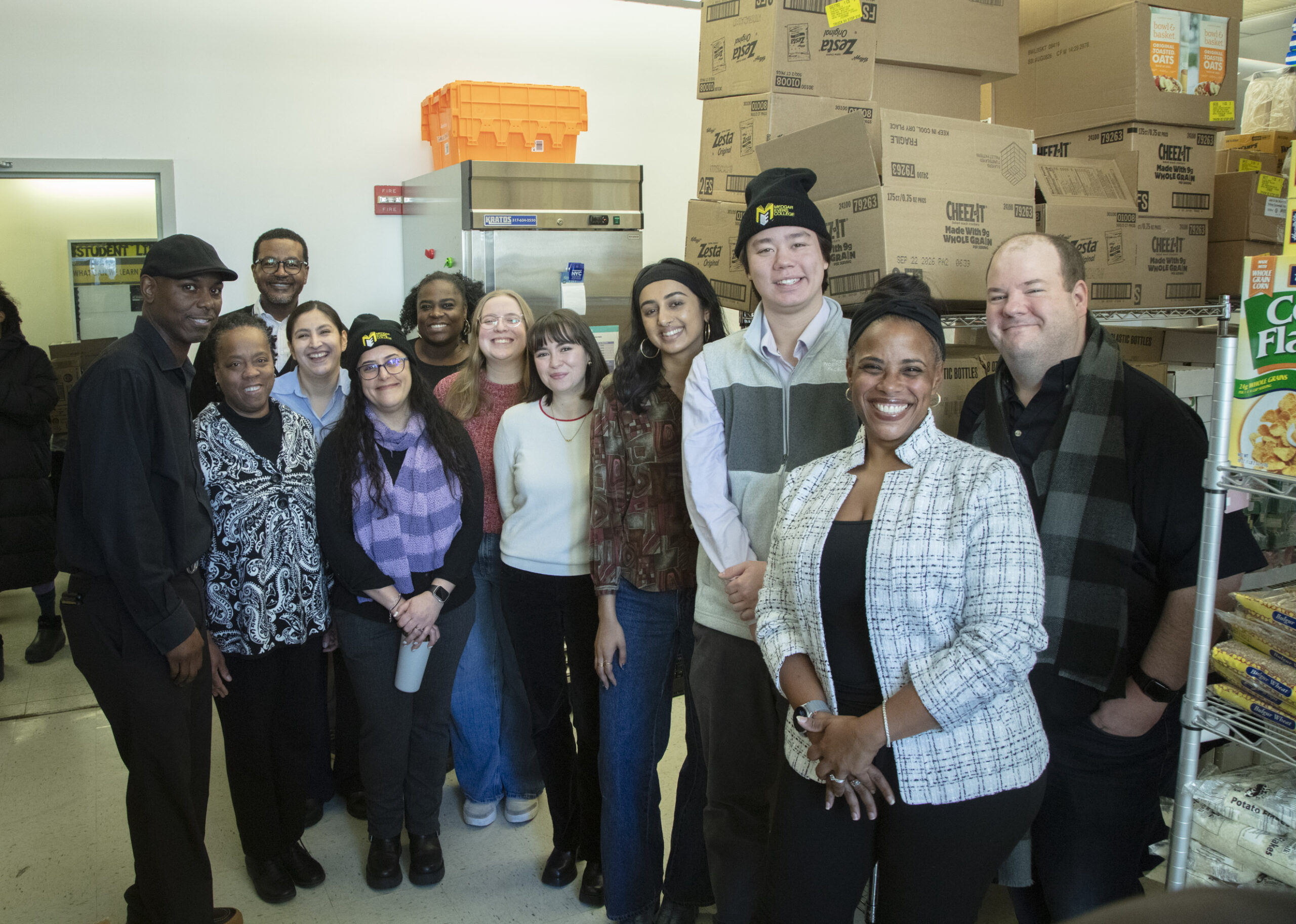
Transition Academy Shines During Recent CUNY Central and City Council Fact-Finding Visit
At a time when food insecurity spikes during the holidays, CUNY Central and the New York City Council continue to provide a vital lifeline to the 250,000-plus students that attend the 25 campuses making up largest urban public university system. Credit the Access to Healthy Food and Nutritional Education initiative, an $875,000 grant that is renewed annually and given to CUNY Central to distribute amongst its various campuses. It serves as a crucial resource for Medgar Evers College’s Transition Academy.
A recent visit by members of CUNY Central and a cohort from the City Council Finance Department saw Dr. Waleek Boone, Transition Academy Director, show the direct effect this funding has by way of a tour of the Cougar Country pantry. On this day, tables were manned by volunteers handing out non-perishable items ranging from beans, pasta, canned tuna and condensed milk to cold weather apparel including knit caps, socks and sweatshirts. Boone took questions from his guests explaining the nuances between services provided by the food pantry and the other segments of the Transition Academy while attending the needs of the nearly 3,900 students matriculating at the school as of the fall semester.
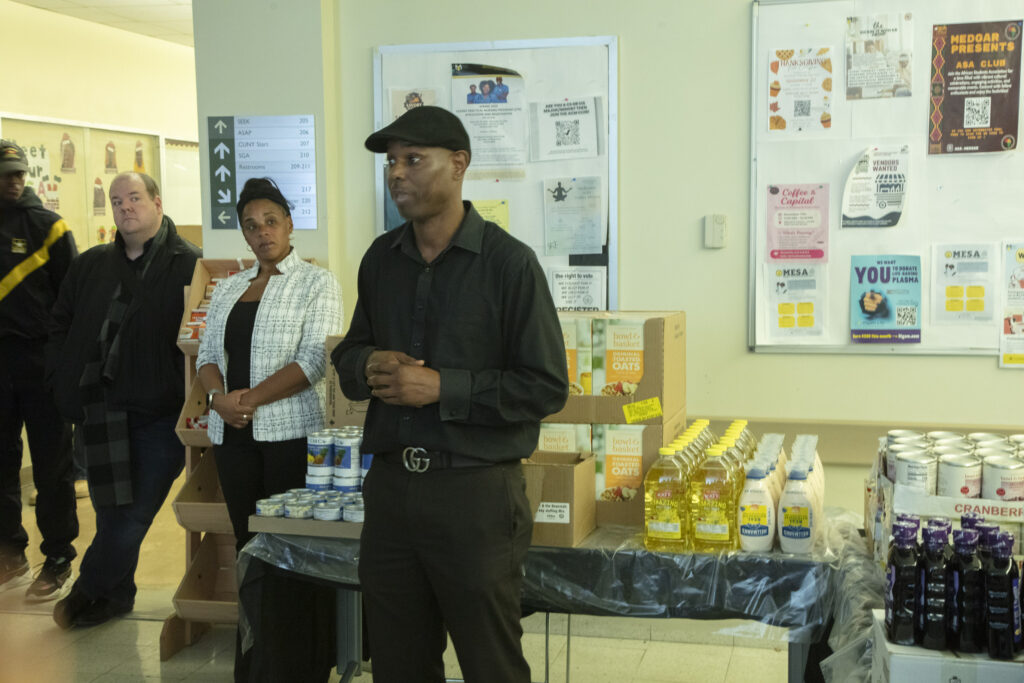
“The food pantry is just one resource that we have for our students. We also partner with the World Food Movement, which comes here once a week to serve our students hot meals. We work with The Campaign Against Hunger, who send out the Fresh Vibes Market to service communities with fresh produce at a reduced price. We then give out vouchers so students can purchase this fresh produce. We also partner with Foodtown of Crown Heights up the block, where we give out vouchers to supplement students with things they don’t get in the food pantry.”
Boone added, “The Transition Academy end is dealing more with the heavy lifting like finding housing, connecting them with resources so they can stay warm and sometimes helping students deal with domestic violence situations. We opened up a thrift store here so now students can go in and get gently used and new clothing because a lot of them don’t feel comfortable in the classroom with their current attire. We also opened up a café where students can go to the Transition Academy to get hot chocolate, tea, coffee, microwavable meals, fruit, snacks, etc. because throughout the day you might get hungry.”
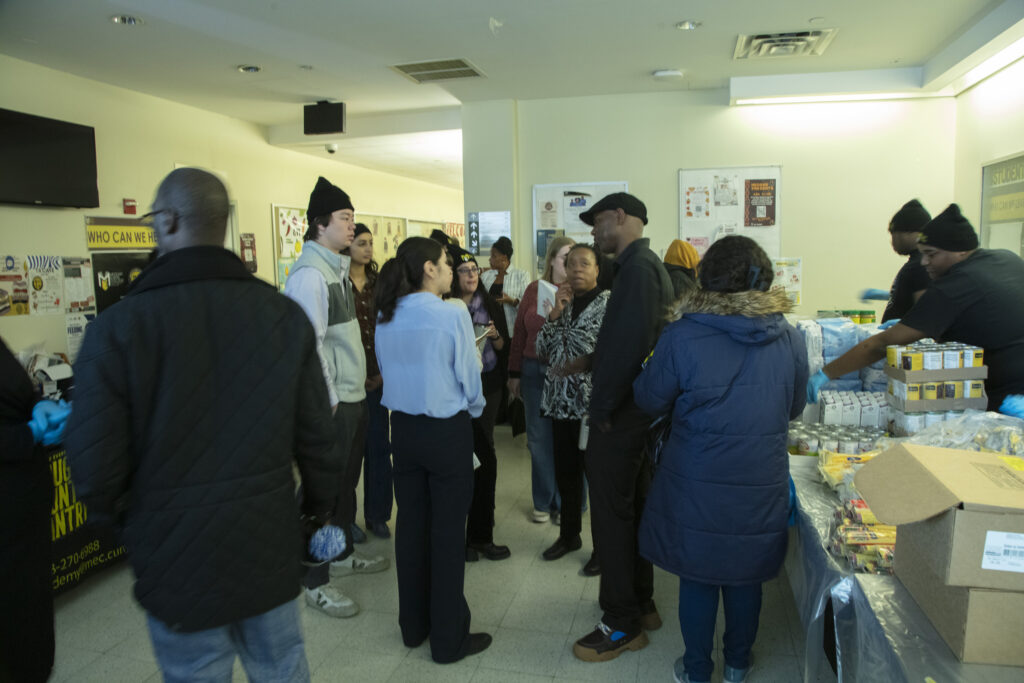
This CUNY-wide initiative came out of a Food State of the City address former City Council Speaker Corey Johnson gave. Launched with $1 million just as the pandemic hit in March 2020, the program has been directed on the CUNY Central side by Dr. Shirley de Peña, the liaison for each school’s food pantries and resource centers. As the point person between the campuses and the City Council, de Peña and her team use a combination of data and real-time conversations with directors like Dr. Boone to determine each school’s needs. With 206,000 visits made to myriad campus food pantries and resource centers in the last calendar year, that kind of specificity is crucial in making sure visitors’ needs are effectively met.
“What we started doing was asking campuses what they need because we do recognize that every campus is different,” de Peña explained. “When it comes to the funding, how much do they need? We ask how many students they can serve weekly and try to serve that number. We are able to serve this year between 64 and 65 students weekly. We have some campuses that are smaller and say they can serve 50 or 30 students.”
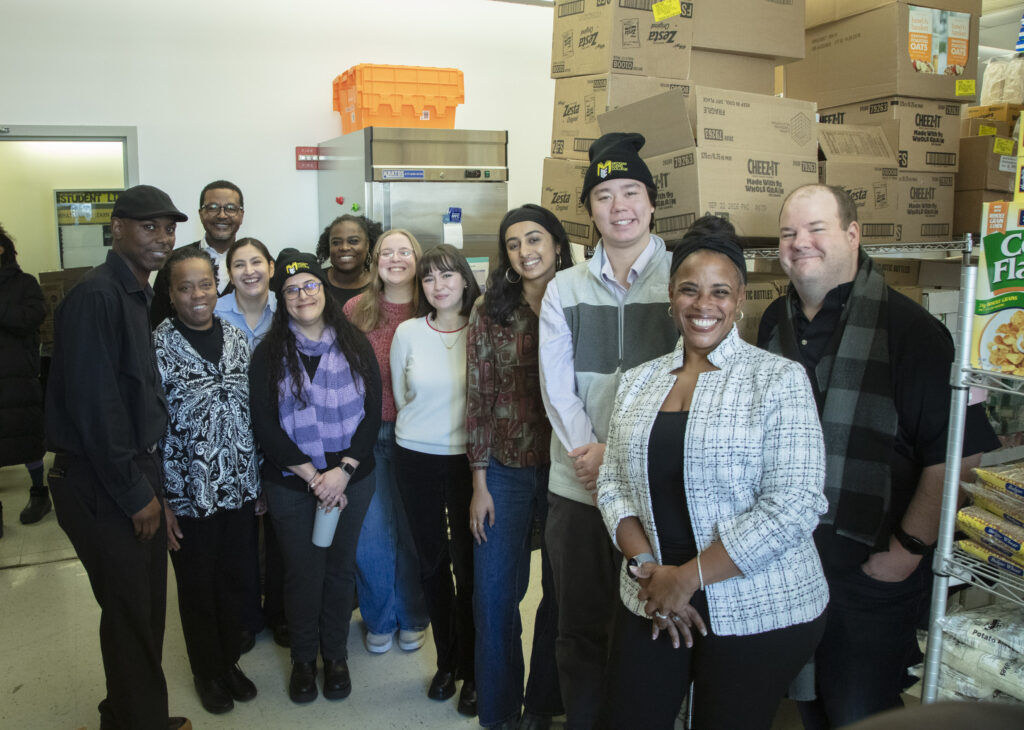
de Peña also shared that student needs go beyond food insecurity and oftentimes involve lack of housing, toiletries, and clothing—essentials Boone pointed out are addressed by the work of the Transition Academy.
“I sit in the Central Office of Student Affairs and our vice chancellor, Dr. [Denise] Maybank, is a very big supporter,” de Peña said. “She’ll say that students are here to get their education, but you can’t get your education if you’re hungry or if you’re homeless. We understand these are not just heads in a seat where you do your homework and you’ll graduate. Programs like the Transition Academy and other resource centers have clothing donations because there are students that need clothing. We are really looking at the whole of the student and understand that students need all these essentials in order to make it through college.”
For Dr. Boone, that philosophy aligns well with the central mission Transition Academy has been on since its founding back in 2017.
“We think about different things. Students tell us what they need and we go out and do our best to incorporate it into the work we’re currently doing. I tell them they are the authors of what we’re doing and we just need to implement it.”