Eighteenth National Black Writers Conference To Honor Award-Winning Poet Camille Dungy
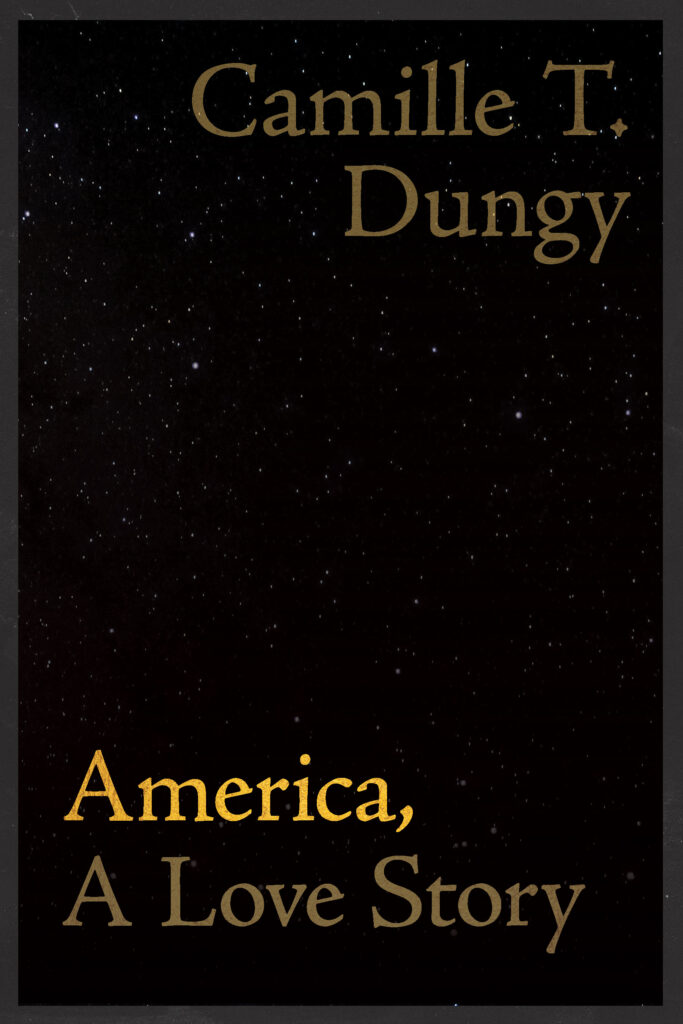
When poet Camille Dungy comes to Medgar Evers College on Saturday, March 25, she’ll be getting honored at the 18th National Black Writers Conference (NBWC), which is being hosted by the Center for Black Literature (CBL). In coming to the Crown Heights campus, Dungy will be riding on the wave of America, A Love Story, her brand-new poetry collection. Given the heightened mood of divisiveness that’s been overshadowing both the daily news cycle and everyday life, she admits the title may be seen as an odd choice.
“People have strong reactions to the title,” Dungy confessed. “‘Really? Love? How do you do that?’ That’s really the core question of the book. How do I keep loving my people during this incredibly fraught moment, both politically and globally? And also, at home. It’s enough to just say you love your spouse and adolescent kid. That’s a challenge in itself in a beautiful way. And then, put on top of it, the questions of what it means to be Black and a woman in America at this moment. It’s a lot to ask. The poems are filled with rage, hope, speculation, exhaustion and joy as my days are.”
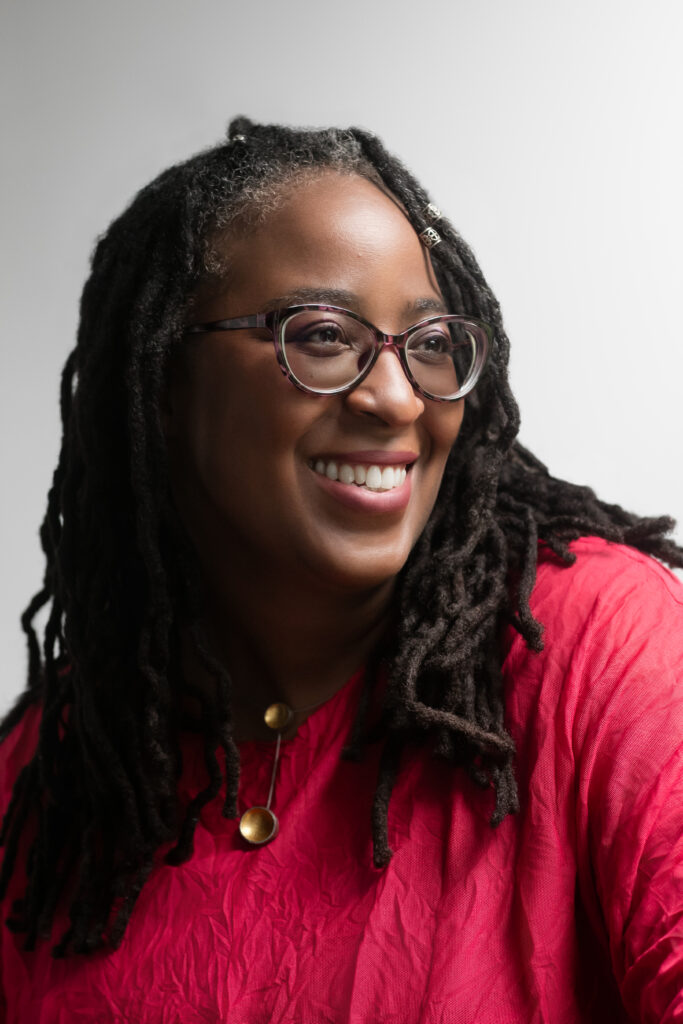
(Photo by Beowulf Sheehan)
She added, “I also think that one of the responses for most of us to the election in 2020 is to just decide to focus on ourselves and our family. And a much closer set of questions because nobody is listening to us and it is so much energy (in day-to-day life). We told you [what was going to happen]. [Kamala Harris] told you and said all of this, so there is no surprise there. You want to take care of yourself and that’s great. A lot of America, A Love Story is incredibly domestic. It’s very much about my house and what happened with my family because the personal is and has always been political.”
America, A Love Story is a tight, 104 pages that took roughly 18 months to compile and features a number of works written between 2017 and 2026. Pieces include “Jamestown 2019,” “This weekend some white woman is writing a tag sale” and “What the Transition Phase of Labor Confirmed about Being a Black Woman in America.” Not unlike the old school approach to listening to full-length albums like Marvin Gaye’s What’s Going On or Beyonce’s Lemonade, Dungy’s latest work is meant to be experienced in one sitting. In curating this anthology, the Denver native was very purposeful in her approach, whether it was ensuring that her individual works gibed thematically or taking the unique approach of reworking poems into a 700-character form which was inspired by a statistic that the average mother loses 700 hours of sleep during the first year of her child’s life.
“I created this 700-character form that is very persnickety,” Dungy explained. “That’s not very many characters and it’s the thought of the language decisions I had to make. It’s hard to know which are the ones that are the 700-character poems. It took a lot of time and effort on my part and is nearly invisible. That also feels to be very directly connected with mothers’ labor, Black women’s labor and with what it means for someone in my subject position to live in this country. I would hope that people would find those and find connection with them.”
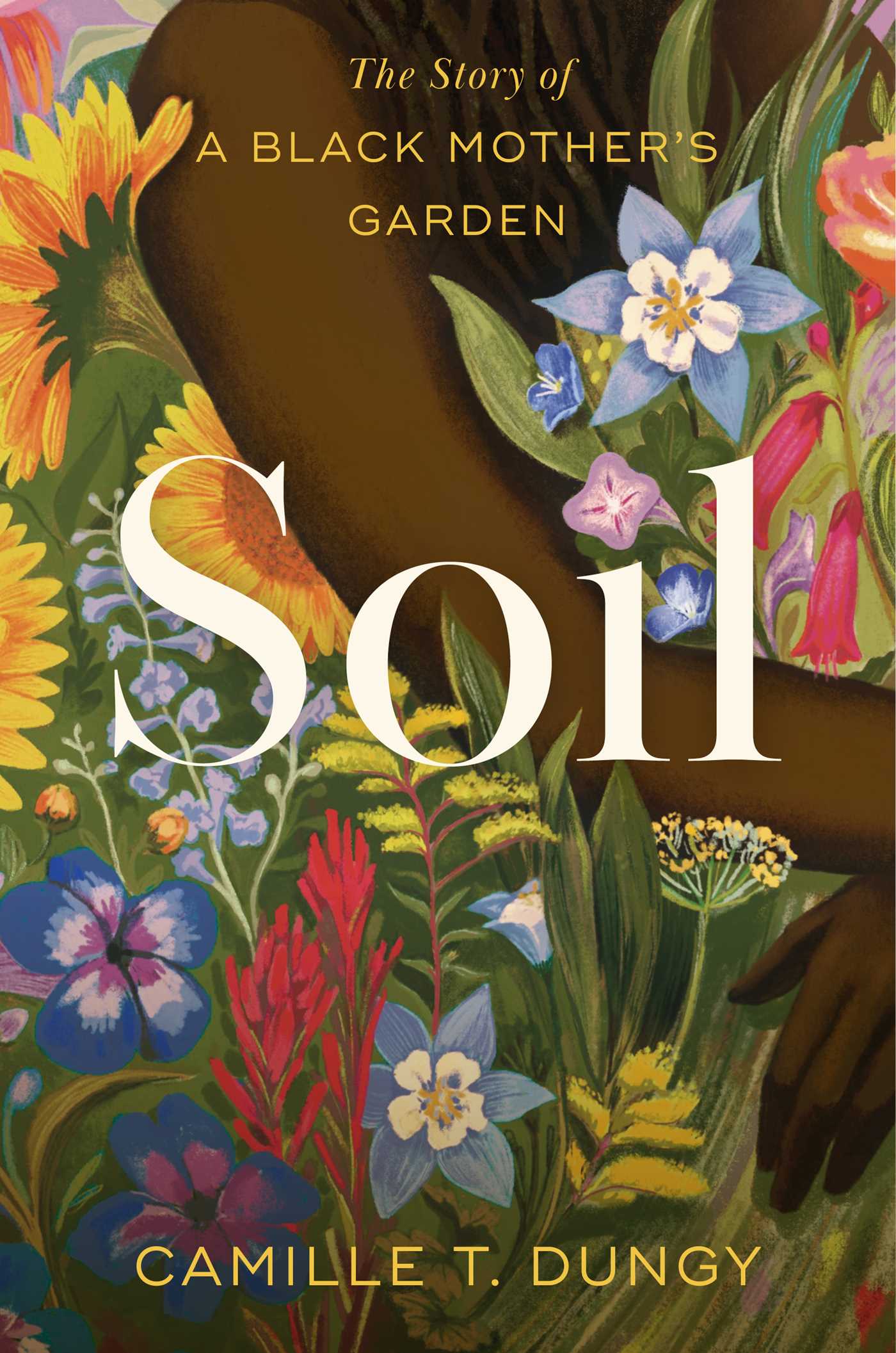
She added, “I will say that America, A Love Story is my first book of solely poetry in almost a decade. I published Soil: The Story of a Black Women’s Garden in the interim and there are some poems in Soil. But as a collection of poetry, this is my first since 2017. Almost all of the poems in America, A Love Story have been previously published. Some as long ago as 2017 and so, in a way, this book is doing both. I have the individual releases, but the poems hit differently when they are in communication with all the other poems. I didn’t want this to simply be a random collection. I wanted a very carefully planned engagement with these poems. Some poems I’ve written and published during that time aren’t in this collection. And a couple that I’m proud of as individual poems that didn’t fit the ethos of this book [were not included].”

Raised in a home full of readers, storied poet Gwendolyn Brooks was an early inspiration for Dungy. When the latter was 12-years-old, a local appearance Brooks was making at UC-Irvine that Dungy attended with her family left a long and lasting impression on the nascent writer, who didn’t know that writing poetry professionally was an option open to her.
“My parents took me to see Gwendolyn Brooks speak and I stood in line afterwards,” Dungy recalled. “I don’t think I had a book for her to sign. She signed my program, ‘Write on’ and gave me her Primer for Young Poets, which was a mimeographed pamphlet. She did this for every young person she met. But, she made me feel uniquely special and uniquely seen. I will do this myself. If young people stand in line for me, I will sign pieces of paper for them, a program or whatever. I don’t know why they don’t have a book, but I want them to have an ‘I was there’ kind of memory.”
Dungy paused and added, “Here I was, a young person, who saw the great degree to which poetry was available to me with an icon like Gwendolyn Brooks. Not just existing and living in the world, but looking me in the eye and saying, ‘Yes, this can be for you also.’ I was lucky in that I also had a similar young experience with Nikki Giovanni and other Black writers.”
Having attended a number of MBWC events in the past, Dungy is deeply moved to be getting honored at this year’s conference. Given the consciousness she is trying to raise with her work, she sees plenty of alignment with what allies like the Center for Black Literature, Furious Flower Poetry Center and the Cave Canem Foundation are trying to do in preserving and advocating for literature centered in and around the African diaspora during these fraught times.
“There may have been a quick little minute in my life where it felt like we were safe and maybe we could chill,” Dungy said. “But that minute is over and it’s being over is proof that we could never have counted on it. It is imperative that Black people collect, archive, support and build each other. And also, it builds us all, right? When I look at what has come out from this organization. The number of professors in universities across America has exponentially increased in the past 20 years along with the number of graduate students, people writing papers and archives collecting our papers. All of that has grown in these last many years as a direct result of the conversations happening at the conference and other similar spaces.”
Camille Dungy will be honored at the 18th National Black Writers Conference on Saturday, March 25 at Medgar Evers College, AB1 Dining Hall, 1638 Bedford Ave. Visit www.centerforblackliterature.org for program and registration information.